

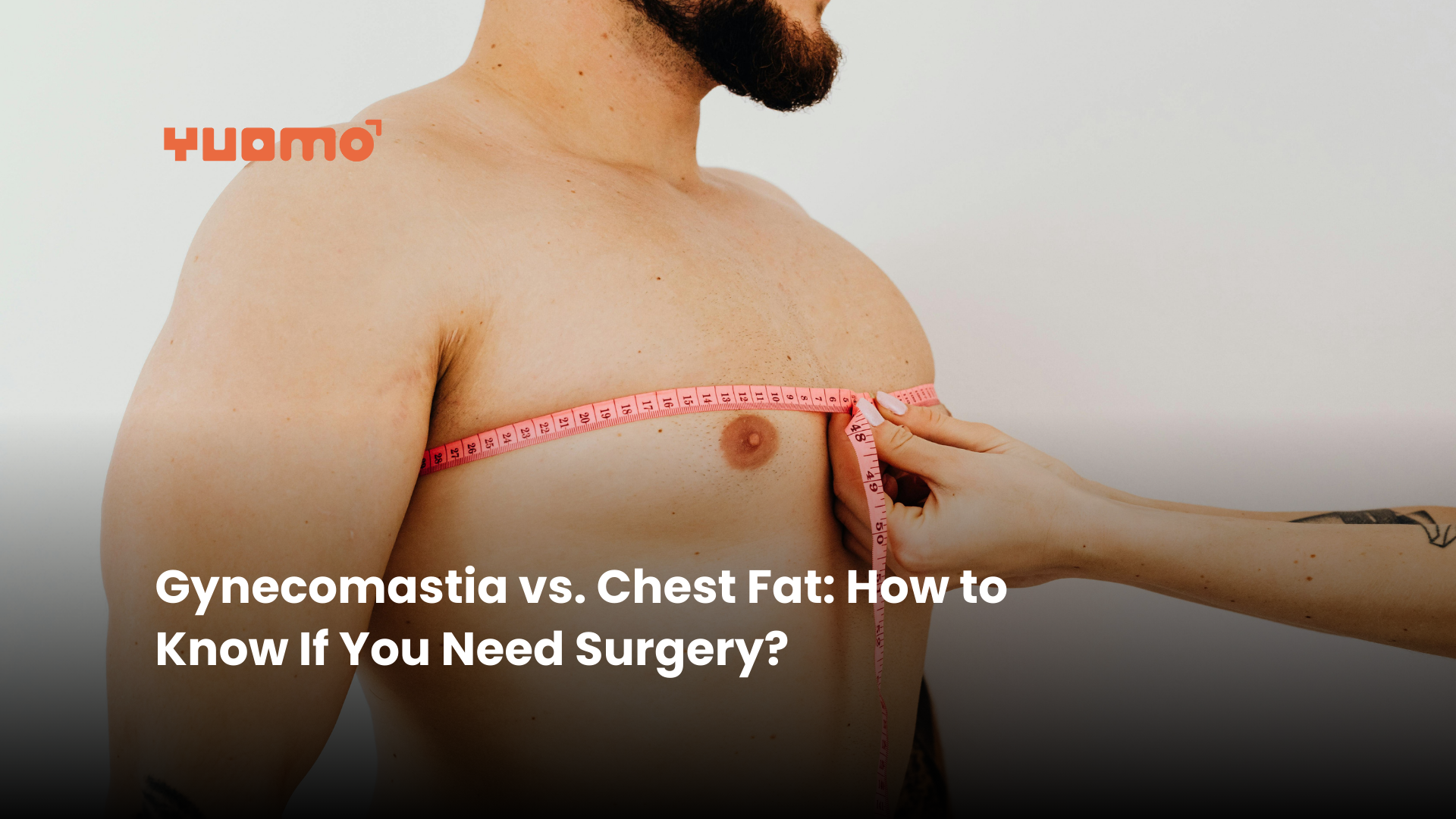
Gynecomastia is enlarged glandular breast tissue caused by a hormonal imbalance (elevated estrogen or low testosterone). Chest fat is fatty tissue accumulation with no glandular growth. Gynecomastia feels firm and rubbery with a distinct lump under the nipple. Chest fat feels soft and squishy. Gynecomastia doesn’t respond to diet or exercise. Chest fat does. This distinction determines everything: one requires surgery, the other requires fitness.
How Do I Know If I Have Gynecomastia or Just Chest Fat?
- The Pinch Test: Place your fingers around your nipple and pinch gently. If you feel a firm, rubbery mass directly beneath the nipple (often walnut-sized or larger), you have glandular tissue indicating gynecomastia. If everything feels soft and squishy without a distinct firm lump, you have chest fat (pseudogynecomastia).
- Texture and Firmness: Gynecomastia feels dense and defined, creating a rounded, contoured chest shape. Chest fat feels soft and saggy without distinct definition. Run your hands across your chest: gynecomastia has structure; chest fat doesn’t.
- Nipple Appearance: Gynecomastia often causes puffiness around the nipple. Your nipple might appear protruding or puffy. Nipple pain in men is common with gynecomastia tenderness or sensitivity that chest fat doesn’t cause.
- Exercise Response Test: If you’ve done consistent chest exercises (push-ups, bench press, cardio) for 3+ months and your enlarged chest hasn’t shrunk at all, you likely have glandular tissue. Exercise reduces chest fat but does nothing for glandular gynecomastia.
- Body Area Specificity: Gynecomastia concentrates behind the nipple area, sometimes unevenly in one or both breasts. Chest fat distributes across the entire chest. Localized enlargement behind the nipple indicates gynecomastia; spread-out enlargement indicates fat.
Also read: How to reduce belly fat? – An expert guide from YUOMO
What Causes Gynecomastia?
Gynecomastia results from hormonal imbalances, specifically elevated estrogen relative to testosterone. Common causes include puberty (temporary hormone fluctuations during teenage years), aging (testosterone naturally declines), medications (steroids, antidepressants, blood pressure drugs), health conditions (liver disease, kidney problems, thyroid issues), bodybuilder gynecomastia (from anabolic steroid use), and lifestyle factors (alcohol consumption, recreational drugs). The common thread is hormonal, not dietary.
What Causes Chest Fat?
Chest fat results from weight gain and lifestyle factors. Primary causes are excess calories from poor diet, sedentary lifestyle and lack of exercise, genetics (some men naturally store fat in the chest area more than others), age (metabolism slows), and hormonal aging. Chest fat is simply excess adipose tissue, the same fat you’d find on your stomach or arms. It develops from caloric surplus and responds to caloric deficit.
Can You Have Both Gynecomastia and Chest Fat at the Same Time?
Yes. Many men have glandular tissue plus excess fatty tissue. This combination is actually common. If you have both, treatment requires addressing both: tissue removal surgery for the glandular component and liposuction for the fatty component. This is why proper diagnosis is critical. You might need both tissue excision and fat removal, not just one approach.
How to Reduce Chest Fat If You Have Pseudogynecomastia?
- Create a caloric deficit: Eat 300-500 calories below maintenance level. Track food intake and maintain consistency.
- Perform consistent cardio: Aim for 30-45 minutes of cardio 3-4 times weekly (running, cycling, swimming). Cardio burns overall body fat, including chest fat.
- Do chest-focused strength training: Perform incline press, cable flyes, dumbbell press, and push-ups to build chest muscle, which improves appearance. Strength training increases metabolism.
- Be consistent: Results appear within 4-8 weeks of dedicated effort. Significant transformation takes 3-6 months. If no improvement after 3 months of consistent diet and exercise, you likely have glandular gynecomastia, not chest fat.
- Use compression vest: Helps appearance under clothing while you work on fitness. It doesn’t treat the condition but manages appearance temporarily.
Also read: Cryolipolysis for Gynecomastia: What It Treats, What It Doesn’t, and Who It’s Right For
How to Get Rid of Gynecomastia If You Have True Glandular Tissue?
Only surgery removes glandular tissue permanently. Exercise cannot eliminate glandular breast tissue because exercise builds muscle and burns fat, it cannot remove or shrink glandular tissue. Non-surgical options (medicine, homeopathy, compression) have extremely limited effectiveness for true gynecomastia. No diet or workout routine will eliminate a firm tissue mass under your nipple. If you’ve confirmed glandular tissue through the pinch test, and exercise hasn’t helped after 3 months, surgery is the realistic solution.
When Do You Need Gynecomastia Surgery?
You need surgery when:
- You have confirmed glandular tissue (firm lump under nipple)
- The condition hasn’t resolved naturally after 1-2 years (pubertal cases often self-resolve)
- Exercise hasn’t helped after 3+ months of consistent effort
- The appearance significantly affects your confidence and daily life
- You experience persistent nipple pain or tenderness
- The enlargement is progressive (getting worse over time, not stable)
You don’t need surgery if:
- Your chest enlargement responds to diet and exercise
- You have pseudogynecomastia (pure fat, no glandular tissue)
- You’re willing to commit to fitness for 3-6 months first
- The condition is mild and not affecting quality of life
If true gynecomastia with glandular tissue is confirmed, surgery is the only permanent solution.
How Much Does Gynecomastia Surgery Cost?
Gynecomastia surgery cost varies by severity and surgeon experience. In Delhi, costs range from ₹80,000 to ₹2,50,000. In government hospitals, cost is lower (₹40,000-₹80,000) but with longer wait times. Cost factors include gynecomastia severity (Grade 1-4), surgeon expertise and reputation, facility quality and amenities, whether combined with liposuction, anesthesia type, and post-operative care included. Most clinics offer payment plans making surgery more accessible. The price reflects the complexity of your specific case, more severe grades, and more extensive tissue removal cost more.
Also read: Gynaecomastia Surgery for Teens: When Is Surgery Safe & Age Appropriate?
What Is Gynecomastia Surgery Recovery Like?
- Immediate recovery (1-2 weeks): Significant swelling, bruising, and soreness managed with prescribed medication. You’ll wear a compression vest 24/7. No heavy lifting or strenuous activity.
- Short-term recovery (3-4 weeks): Soreness decreases. Most men return to desk work. Compression vest worn continuously. Light walking is encouraged.
- Medium-term recovery (6-8 weeks): Most men can resume normal activity and light exercise. Compression vest worn during day. Chest exercise remains restricted.
- Full recovery (3-6 months): Complete return to normal activity and chest workouts. Swelling continues decreasing. Final results emerge as scars fade.
- Scars: Typically small (around areola) and fade dramatically over 6-12 months, becoming nearly invisible. Experienced surgeons minimize scarring through precise incision placement.
Is Nipple Pain in Men a Sign of Gynecomastia?
Nipple tenderness or pain in men often indicates gynecomastia, especially when combined with visible enlargement or a firm tissue lump. Gynecomastia commonly causes nipple sensitivity, soreness, or mild pain due to hormonal stimulation of breast tissue. Chest fat typically doesn’t cause nipple discomfort. If you experience nipple pain combined with visible enlargement or firmness, gynecomastia is likely. If pain is your only symptom without visible changes, consult a doctor to rule out other conditions.
Can You Get Gynecomastia From Weight Gain?
Weight gain can trigger or worsen existing gynecomastia through two mechanisms. First, fat tissue produces estrogen; significant weight gain increases estrogen levels, worsening hormonal imbalance. Second, increased weight can mask pre-existing gynecomastia under fat cover. Conversely, losing weight helps but won’t eliminate glandular tissue if present. If you developed breast enlargement during weight gain, losing weight might improve your appearance by reducing surrounding fat. However, if a firm glandular tissue remains after weight loss, surgery becomes necessary. The distinction: gynecomastia gets worse with weight gain and won’t fully resolve with weight loss; pure chest fat improves significantly with weight loss.
Is Bodybuilder Gynecomastia From Steroids Reversible?
Steroid-induced gynecomastia develops as glandular tissue, not fat. It feels firm, causes nipple changes, and doesn’t respond to diet or exercise. If steroids are stopped early in gynecomastia development, it sometimes improves or even reverses as hormones rebalance. However, if glandular tissue has developed significantly, stopping steroids won’t eliminate the need for surgery. The longer gynecomastia persists, the less likely it is to reverse naturally. Early intervention is critical. If you’re noticing breast development from steroid use, stop immediately and consult a doctor. Established steroid-induced gynecomastia requires surgical removal for permanent results.
Also read: Is Liposuction a Weight Loss Treatment or Body Contouring Solution?
What Is the Difference Between Male Breast Enlargement From Fat vs. Glandular Tissue?
- Fat enlargement: Soft tissue, jiggles with movement, distributed across entire chest, responds to diet and exercise, no nipple tenderness, no firm lump on examination.
- Glandular enlargement (gynecomastia): Firm tissue, doesn’t jiggle, concentrated behind nipple, doesn’t respond to diet or exercise, often includes nipple tenderness or sensitivity, distinct firm lump on examination, may be uneven between breasts.
- Key distinction: Fat enlargement can be improved through lifestyle changes. Glandular enlargement requires surgery. The pinch test determines which you have: firm lump indicates glandular; soft tissue indicates fat.
Is Chest Fat Surgery the Same as Gynecomastia Surgery?
No. These are different procedures with different techniques and recovery timelines.
- Chest fat surgery: Uses liposuction to remove fatty tissue. Small cannula is inserted to suction fat. Recovery is fastest; most men resume activity by week 3-4. Results visible within weeks as swelling decreases quickly. Appropriate only for pseudogynecomastia (fat only).
- Gynecomastia surgery: Removes glandular tissue through excision. Small incisions around areola allow direct tissue removal. Often combined with liposuction for optimal contouring. Recovery is longer; most men need 6-8 weeks before full activity. Results take 3-6 months as swelling decreases. Appropriate for true gynecomastia (glandular tissue).
Mixing these approaches wastes money and produces poor results. Correct diagnosis determines correct surgical approach.
How Long Does It Take to See Results From Exercise for Chest Fat Reduction?
Noticeable results appear within 4-8 weeks of consistent diet and exercise. Visible changes in chest shape emerge within 6-12 weeks with proper nutrition and training. Significant transformation requires 3-6 months of dedicated effort. If no improvement appears after 3 months of consistent, intense diet and exercise, you’re likely dealing with gynecomastia (glandular tissue), not chest fat. The 3-month mark is your decision point: if exercise worked, continue. If not, pursue surgical evaluation. Many men spend years exercising futilely because they have true gynecomastia that exercise cannot address.
Also read: Postoperative Recovery & Scar Care: What to Expect After Gynecomastia Surgery
Should You Try Exercise First or Go Straight to Surgery?
- Try exercise first if: You’re unsure whether you have gynecomastia or chest fat. The pinch test suggests mostly fat. You’re willing to commit fully for 3 months. You want to avoid surgery if possible.
- Go straight to surgery if: You’ve confirmed firm glandular tissue (positive pinch test). You’ve already tried exercise for 3+ months without improvement. The condition significantly affects your confidence and mental health. You’re ready for definitive results. You understand glandular tissue won’t respond to exercise.
- The realistic approach: If unsure, do the pinch test. If the result is ambiguous, try focused diet and exercise for 3 months. If no improvement, consult a specialist. If the pinch test clearly shows firm tissue, surgery is the appropriate solution rather than wasting 3+ months on exercise that won’t help.
What Does Yuomo’s Gynecomastia Evaluation Include?
Yuomo begins every gynecomastia case with accurate diagnosis: determining whether you have true gynecomastia (glandular tissue) or pseudogynecomastia (chest fat). We perform physical examination with the pinch test, tissue assessment, and nipple evaluation. We often use ultrasound imaging to confirm glandular tissue presence if examination is ambiguous. We review your medical history including medications, health conditions, and family history. We discuss your goals and treatment preferences. Based on findings, we recommend either surgical treatment (for confirmed gynecomastia) or fitness guidance (for chest fat). We don’t push surgery on people who need fitness. We don’t recommend futile exercise to people who need surgery. We provide honest evaluation and realistic expectations.
Ready to Know Your Answer?
The difference between gynecomastia and chest fat determines your entire treatment path. Gynecomastia requires surgery. Chest fat requires fitness. The pinch test gives you your answer in seconds. If you feel firm tissue, consult a specialist. If you feel soft tissue, commit to 3 months of a dedicated diet and exercise.
Yuomo provides expert evaluation distinguishing gynecomastia from chest fat, then guides you toward the right solution, whether that’s surgery or fitness. Get properly assessed before wasting time or money on the wrong approach.
Your masculine chest is achievable. You just need to know which path gets you there.
FAQs
- Can you get gynecomastia from medication?
Yes. Steroids, antidepressants, blood pressure medications, and anti-ulcer drugs can all cause gynecomastia as a side effect. If you developed breast enlargement after starting a medication, consult your doctor about alternatives or stopping the drug. - How to reduce man boobs without surgery?
If you have chest fat (pseudogynecomastia), diet and exercise work: create a caloric deficit, perform cardio 3-4 times weekly, do chest-focused strength training, and maintain consistency for 3-6 months. If you have true gynecomastia (glandular tissue), surgery is the only permanent solution. - Can nipple pain mean something other than gynecomastia?
Nipple pain can indicate gynecomastia, but also other conditions like duct inflammation or skin irritation. If combined with visible enlargement or a firm tissue mass, gynecomastia is likely. If pain is isolated without other symptoms, consult a doctor. - Can you get gynecomastia twice?
If you have surgery removing glandular tissue, that tissue doesn’t grow back. However, new gynecomastia can develop if hormonal factors trigger it again. Some men develop recurrent symptoms years after surgery if hormone imbalance returns. Prevention involves maintaining healthy weight and avoiding triggering medications. - Is gynecomastia surgery permanent?
Results are permanent. Removed glandular tissue doesn’t regenerate. Scars fade significantly over 6-12 months. Results mature over 3-6 months as swelling fully decreases. If you maintain stable weight and avoid triggering factors, your results will last. - What’s the success rate of gynecomastia surgery?
Success rate exceeds 95% for tissue removal and appearance improvement. Most men see dramatic transformation and significant confidence boost. Complications are rare (less than 5%) and typically minor. Satisfaction rates are very high because results are permanent and noticeable. - Can you tell if someone has gynecomastia or chest fat by looking?
Visually, gynecomastia and chest fat can look similar, which is why physical examination is necessary. However, gynecomastia often shows as a rounder, more defined chest shape with puffy nipples. Chest fat appears softer and more distributed. The pinch test is the definitive diagnostic tool; visual inspection alone isn’t reliable.