

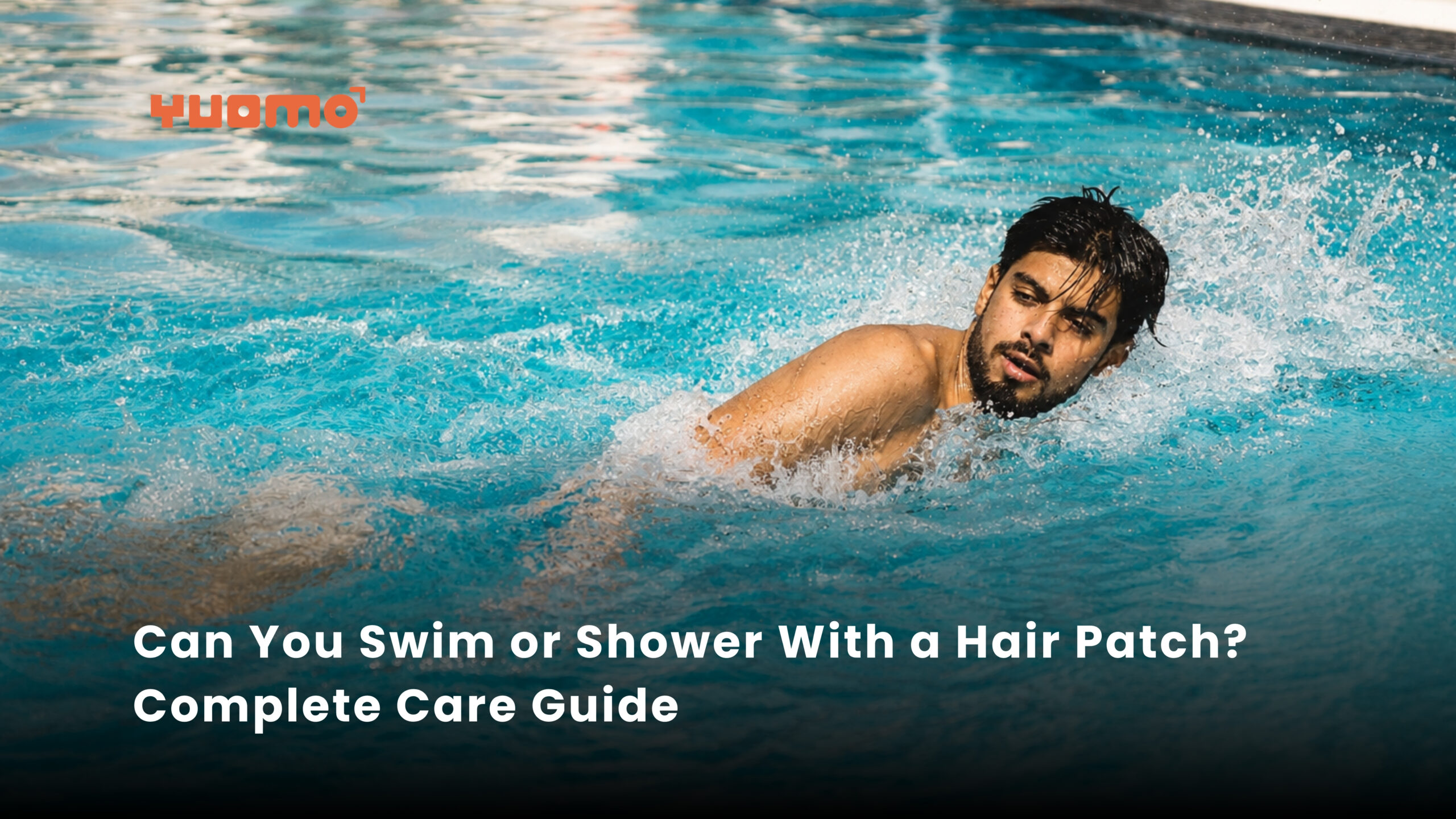
Yes you can swim and shower with a hair patch. But how long it stays secure, how natural it looks, and how long it lasts depend almost entirely on how you prepare, what adhesive you use, and what you do afterwards. This guide covers everything men with a non-surgical hair patch need to know about water, from daily showering to pool sessions and sea swimming.
Key Takeaways
- You can shower daily with a hair patch designed for regular water contact.
- Swimming is possible with the right waterproof adhesive, but needs specific preparation and aftercare.
- Wait at least 24–48 hours after a fresh bonding session before getting it wet.
- Chlorine (pools) and salt water (sea) both dry out the hair and weaken the adhesive rinse thoroughly after.
- Lace base patches are more water-sensitive than polyurethane (skin) bases.
- Re-bonding is needed every 2–4 weeks for regular swimmers more frequently than non-swimmers.
Can You Shower With a Hair Patch?
Yes, showering with a hair patch is completely fine in fact, it is expected. A professionally bonded hair patch in Delhi is designed to withstand daily contact with water. You can shower every day as long as you use a gentle, sulfate-free shampoo, wash in lukewarm (not hot) water, and avoid rubbing aggressively at the base.
Hot water and harsh shampoos are the two things that weaken the adhesive bond fastest in a shower, so avoiding both extends the life of your bond significantly. After showering, pat gently, never rub and let it air dry or use a low-heat dryer.
Can You Swim With a Hair Patch?
Yes, swimming with a hair patch is possible, but it requires more preparation than a daily shower. The key difference is duration and chemical exposure pools contain chlorine and the sea contains salt, both of which are harsher than plain shower water and degrade both the hair and the adhesive over time.
With a waterproof medical-grade adhesive and the right aftercare routine, most men can swim comfortably without their patch lifting or shifting.
Lace vs Polyurethane Base Why It Matters in Water
The base material of your hair patch changes how water affects it:
- Lace base breathable and natural-looking but more porous, which means water, chlorine, and salt get through more easily and the adhesive weakens faster. Better suited to occasional swimming.
- Polyurethane (skin) base denser and more water-resistant. The adhesive bonds more securely against a smooth surface, making it more suitable for regular swimmers.
Before swimming regularly, ask your YUOMO stylist which base your patch uses and whether the adhesive is rated for water exposure.
The 24-48 Hour Rule: When Not to Swim
After a fresh bonding session, the adhesive needs time to fully cure. Swimming or even heavy sweating within 24–48 hours of a new bond risks lifting the edges and compromising the hold. Wait at least two days after your hair patch service before getting in a pool or the sea.
Before You Swim: Preparation Tips
A few minutes of preparation protects both the hair and the bond:
- Pre-rinse with fresh water before entering the pool hair that’s already saturated absorbs far less chlorine.
- Apply a leave-in conditioner to the hair strands to create a barrier against chlorine and salt.
- Secure the edges with a small amount of extra waterproof adhesive tape if needed, especially around the perimeter.
- Tie the hair loosely if it’s long enough, to reduce tangling and drag in the water.
- Wear a silicone swim cap if you’re doing laps regularly it significantly reduces water contact and friction.
What to Avoid During Swimming?
- Avoid diving or underwater flips the drag force can tug on the patch edges.
- Don’t rub your scalp or run fingers aggressively through the hair in the water.
- Limit sessions to a comfortable duration and an occasional swim is very different from daily training.
After Swimming: The Most Important Step
Aftercare matters more than anything else for keeping a hair patch in good condition after swimming:
- Rinse immediately with clean, cool fresh water to flush out chlorine or salt before it dries into the hair and adhesive.
- Wash gently with a sulfate-free, mild shampoo, never harsh or medicated shampoos.
- Condition thoroughly with a light, hydrating conditioner to replenish moisture stripped by chlorine or salt.
- Pat dry with a soft towel, no rubbing. Use a wide-tooth comb to detangle gently.
- Check the bond edges if any edge has lifted, visit your stylist for a touch-up rather than leaving it loose.
Pool vs Sea: Which Is Harder on a Hair Patch?
Both are damaging in different ways. Chlorinated pool water dries out the hair strands quickly and can break down certain adhesives with repeated exposure. Salt water is similarly drying and adds a residue that dulls the hair if not rinsed promptly. Of the two, regular pool swimming (daily or several times a week) tends to wear a bond down faster because of the consistent chemical load.
For Frequent Swimmers: The Dedicated Swim Patch
If you swim regularly in training, competitive sport, or daily laps, consider keeping a dedicated swim patch: a separate, more affordable unit used only for swimming, while your primary, better-quality patch is kept for daily wear. This is the single most practical tip for active men, as it dramatically extends the life of your main patch. Ask your stylist at YUOMO about setting this up.
How Often Does Re-Bonding Change If You Swim?
For non-swimmers, re-bonding is typically needed every 3–6 weeks. If you swim regularly, expect to need touch-ups or a full re-bond every 2–3 weeks, as water and chemical exposure weaken the adhesive faster. Your YUOMO will assess the bond and advise on timing during each visit.
Thinking Long-Term: Hair Patch vs Permanent Solutions
A hair patch needs ongoing maintenance, re-bonding, careful water care, and periodic replacement of the unit. If you lead a highly active, water-heavy lifestyle (daily swimming, intense gym sessions, outdoor sports), a permanent solution may be more practical long-term.
A hair transplant uses your own DHT-resistant follicles, grows naturally, and needs no special water care you can swim, shower, and sweat without a second thought once healed. For early or moderate thinning where you want to preserve existing hair before considering surgery, GFC hair treatment strengthens weakening follicles using your own growth factors. For a full comparison before you decide, see our guide on hair patch vs hair transplant.
Get Expert Hair Patch Care at YUOMO
Whether you need a new hair patch fitted, a re-bond after swimming, or advice on the right adhesive for your lifestyle, YUOMO is India’s dedicated men’s aesthetic and wellness clinic with experienced hair specialists across Delhi, Bangalore, and Mumbai. Book a consultation and get a patch and maintenance plan built around how you actually live.
Frequently Asked Questions
Can I shower every day with a hair patch? Yes. Daily showering with a hair patch is fine as long as you use a sulfate-free shampoo, lukewarm water, and pat dry gently. Avoid hot water and harsh products that weaken the bond.
Can you swim with a non-surgical hair patch? Yes, with the right waterproof adhesive and proper preparation and aftercare. Rinse with fresh water before and after, use a leave-in conditioner, and check the bond edges after every swim.
How soon after bonding can I swim? Wait at least 24–48 hours after a fresh bonding session before swimming or heavy sweating, to allow the adhesive to fully cure.
Does chlorine damage a hair patch? Yes, over time. Chlorine dries out the hair strands and can degrade certain adhesives. Rinsing immediately after swimming and conditioning thoroughly minimises the damage.
Can I swim in the sea with a hair patch? Yes, with the same precautions as pool swimming. Salt water is similarly drying rinse with fresh water immediately after to prevent salt residue building up.
How often do I need re-bonding if I swim regularly? Regular swimmers typically need re-bonding every 2–3 weeks, compared to 3–6 weeks for non-swimmers, as water exposure weakens the adhesive faster.
Is a lace or polyurethane base better for swimming? Polyurethane (skin) bases are generally more water-resistant and better for frequent swimmers. Lace bases are more breathable but more porous