

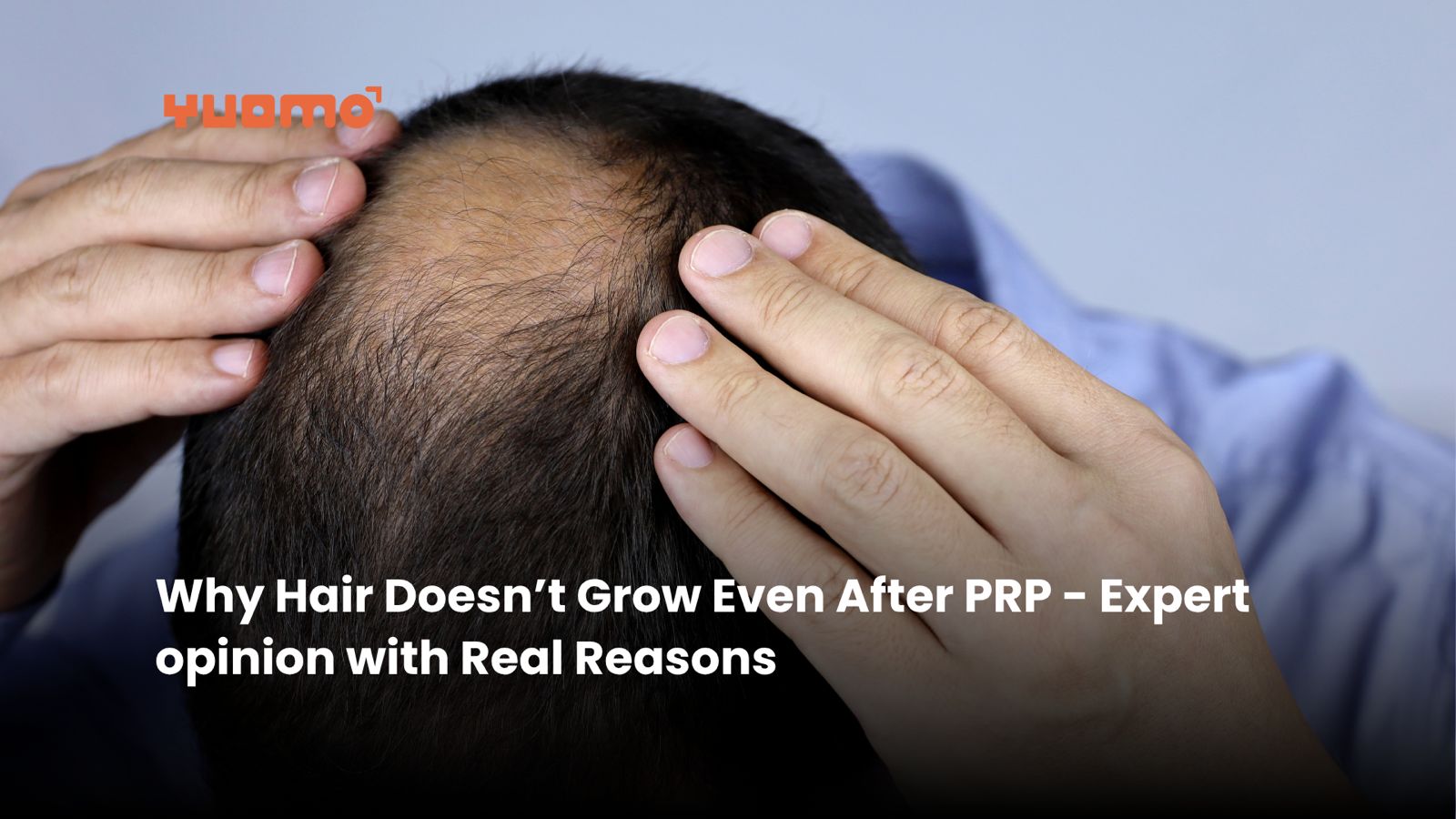
Platelet-rich plasma (PRP) hair treatment has become one of the leading non-surgical solutions for hair loss in recent years. PRP hair treatment uses the growth factors from your own blood to activate dormant hair follicles, which encourages new hair growth with new, thicker hair. However, with the increase in popularity, not everyone experiences the same results, leading people to frequently ask, “Why is my hair not growing even after PRP?” We will explore the reasons PRP treatment may not provide the anticipated results and avenues to improve your hair growth journey.
1. More Expectations from PRP Hair Treatment
PRP isn’t a one-session miracle. It’s a gradual process that requires consistency and patience. Most experts recommend 3-6 sessions of PRP hair treatment spaced 3-4 weeks apart, followed by maintenance sessions every 6-12 months. If you expect dramatic regrowth after one sitting, you may feel disappointed. PRP primarily strengthens existing hair follicles, slows hair fall, and improves hair texture before new hair starts appearing.
Tip: Track your progress with photos every month instead of expecting an overnight transformation.
2. Advanced Hair Loss or Inactive Follicles
For PRP treatment to work, you need active hair follicles. If bald patches have been there for years or follicles have completely shrunk, PRP may not be effective. In such cases, hair transplant or combination treatments may work better. PRP can revive weak follicles, but not those that are permanently dead. This is why early intervention is key.
3. Poor Platelet Quality or Low Platelet Count
The success of PRP hair treatment depends largely on the quality of platelets extracted from your blood. If your platelet concentration is low or the PRP isn’t processed correctly, the treatment won’t have enough growth factors to trigger regeneration.
Factors that affect platelet quality:
- Frequent Smoking or alcohol consumption
- Poor nutrition
- dehydration
- Certain medications like blood thinners
Before treatment, your doctor might suggest a CBC or platelet count test to ensure your PRP sample is suitable.
Expert Opinion –
| Dr. Sandeep Rana – “PRP treatment can work wonderfully when done right- but it’s not a one-size-fits-all therapy,” explains Dr. Sandeep Rana, a highly skilled Hair Transplant Surgeon with over 1,100+ successful procedures. He adds, “The key lies in identifying the right candidates, using advanced PRP kits, and maintaining consistency across sessions. |
4. Gaps Between PRP Sessions
If you’re skipping sessions, this can simultaneously interrupt your hair growth cycle. The growth factors released during PRP treatment in Delhi work best when applied consistently over several months. Whereas to achieve the best results, follow your doctor’s recommended schedule closely, your irregular sessions may reduce the PRP hair treatment success rate.
5. Improper Technique or Poor Equipment
The effectiveness of PRP also depends on how it’s prepared and delivered. Outdated centrifugation methods, poor-quality kits, or incorrect injection depth can lead to suboptimal outcomes. That’s why choosing a reputed clinic like YUOMO Men’s Aesthetics & Wellness Clinic and an experienced dermatologist or a doctor for PRP treatment in Delhi is essential. Clinics that use FDA-approved kits and precise delivery methods ensure higher success rates.
6. Underlying Health Conditions
Certain medical conditions can reduce your body’s ability to respond to PRP. Issues like:
- Regular tobacco use or consumption of alcohol
- Unhealthy eating habits
- Not consuming enough fluids or not replenishing fluids lost through perspiration
- Taking certain drugs, including blood thinners or other medications can all slow down new hair growth.
In such cases, your doctor may combine PRP with nutritional supplements or lifestyle modifications to enhance results.
7. Poor Post-Treatment Care
What you do after PRP sessions matters as much as the procedure itself.Common mistakes people make:
- Washing hair too soon after treatment is considered to be a mistake right after the treatment.
- If you’re skipping prescribed medications or serums, it’ll directly affect your PRP treatment, and you might not get the desired results.
- Poor diet and low water intake can be said to be the most important things to consider if you’ve gone through any kind of hair treatment in Delhi.
- Exposure to harsh sunlight or pollution is a must, not to mention that hair loss is a result of harsh climatic and your more exposure to pollution.
Following proper aftercare guidelines, like avoiding smoking, eating a protein-rich diet, and using mild shampoos, significantly improves outcomes.
8. Not Everyone Responds the Same Way
Genetics play a huge role in determining how well your scalp responds to PRP. Some individuals have follicles that react quickly to growth factors, while others may show slower progress. Consistency, patience, and a customised plan designed by an experienced PRP hair specialist are the keys to success.
How to Improve Your PRP Hair Treatment Results
To make the most of your PRP sessions, here’s what experts recommend:
- Start early: The sooner you begin PRP for hair loss, the better the results.
- Follow a healthy lifestyle: Eat balanced meals rich in protein, iron, and vitamins.
- Avoid stress: Chronic stress increases hair fall; include relaxation techniques.
- Stay consistent: Don’t skip sessions; results build over time.
- Choose the right clinic: Expertise and technology matter more than price.
The Cost and Success Rate of PRP Hair Treatment
The PRP treatment cost in Delhi or other metro cities generally ranges from ₹4,000 to ₹10,000 per session, depending on the clinic, equipment used, and the doctor’s expertise. While the PRP hair treatment price may seem high initially, it’s an effective, non-surgical, and safe approach compared to more invasive alternatives.
| City | Average PRP Cost (Per Session) | Overall Success Rate | Why Choose / Not Choose |
| Delhi | ₹5,000 – ₹15,000 | 70-90% | Affordable, high-quality clinics, experienced dermatologists, and advanced technology. |
| Mumbai | ₹10,000 – ₹20,000 | 75-85% | Good quality but higher costs and longer waiting times. |
| Chennai | ₹7,000 – ₹14,000 | 70-80% | Limited PRP-specialised clinics; results vary. |
When performed by experts, the PRP hair treatment success rate ranges between 70-90%, especially for early-stage hair thinning and androgenetic alopecia. PRP is a promising solution for hair loss, but it’s not magic. Knowing what affects your results can help you achieve better outcomes and set more realistic expectations for PRP treatment in Delhi.
At YUOMO, our hair experts offer personalised PRP hair treatment in Delhi, totally customized to your ongoing scalp condition and goals. With advanced techniques, we help you achieve a stronger, healthier hair growth with lasting results.
FAQs about PRP Hair Treatment in Delhi
- Why is my hair not growing after PRP?
PRP therapy is a popular hair loss treatment, but it may not work for everyone. Reasons for PRP treatment not working include a low concentration of platelets,an excessively high platelet concentration, an advanced stage of hair fall, improper technique of delivery, and excessive smoking. - Is losing 200 hairs a day normal?
No, losing 200 hairs a day is not considered normal, as the average is typically 50-150 hairs per day. While some sources state that up to 200 hairs can be normal, especially on wash days, consistently shedding more than 100 hairs daily suggests a potential issue, and losing 200 hairs per day could indicate a problem. - Is PRP really good for hair?
It has been established to be the most effective therapy for increasing hair volume and quality in hair loss sufferers. PRP is a medication that utilizes the healing potential of the human body, whereby factors found in a person’s platelets are implemented to augment hair growth.