

For a lot of men, chest fullness isn’t just a physical thing. It affects how you dress, how you carry yourself, and whether you take your shirt off at the pool. It’s one of those concerns that sits quietly in the background, and for many, it has for years.
If you’ve been looking into non-surgical options and landed on cryolipolysis, you’re asking the right question. The answer, though, isn’t a simple yes or no. It depends on what’s actually causing the fullness, and that distinction changes everything.
True Gynecomastia vs. Pseudo-Gynecomastia
Before talking about any treatment, it’s important to understand that not all male chest fullness is the same condition.
- True gynecomastia is the development of actual glandular breast tissue beneath the nipple, driven by hormonal changes, typically a shift in the ratio of oestrogen to testosterone. This can happen during puberty, with age-related testosterone decline, certain medications, or underlying health conditions. Glandular tissue is firm, often concentrated directly under the areola, and it does not respond to fat reduction treatments of any kind. Cryolipolysis will not touch it.
- Pseudo-gynecomastia is chest fullness caused by localised fat accumulation, not glandular tissue. It looks and feels similar to the untrained eye, but the underlying cause is entirely different. This is the type that responds well to fat-freezing treatment.
- Mild gynecomastia, which many men actually have, often involves a small amount of glandular tissue combined with fat-related fullness around it. For this group, cryolipolysis can meaningfully reduce the fatty component and improve chest contour, even if it doesn’t eliminate every element of the condition.
Getting this distinction right before starting any treatment is essential. A proper clinical assessment, not just a self-diagnosis, is the only reliable way to know which category applies to you.
Also read: Abdominal Liposuction for Men: Getting Visible Abs
How Cryolipolysis Works?
Cryolipolysis works by delivering precisely controlled cooling to a targeted area of fat. Fat cells are more vulnerable to cold temperatures than surrounding skin, muscle, or nerve tissue so the treatment selectively triggers apoptosis (programmed cell death) in fat cells without causing damage to anything else.
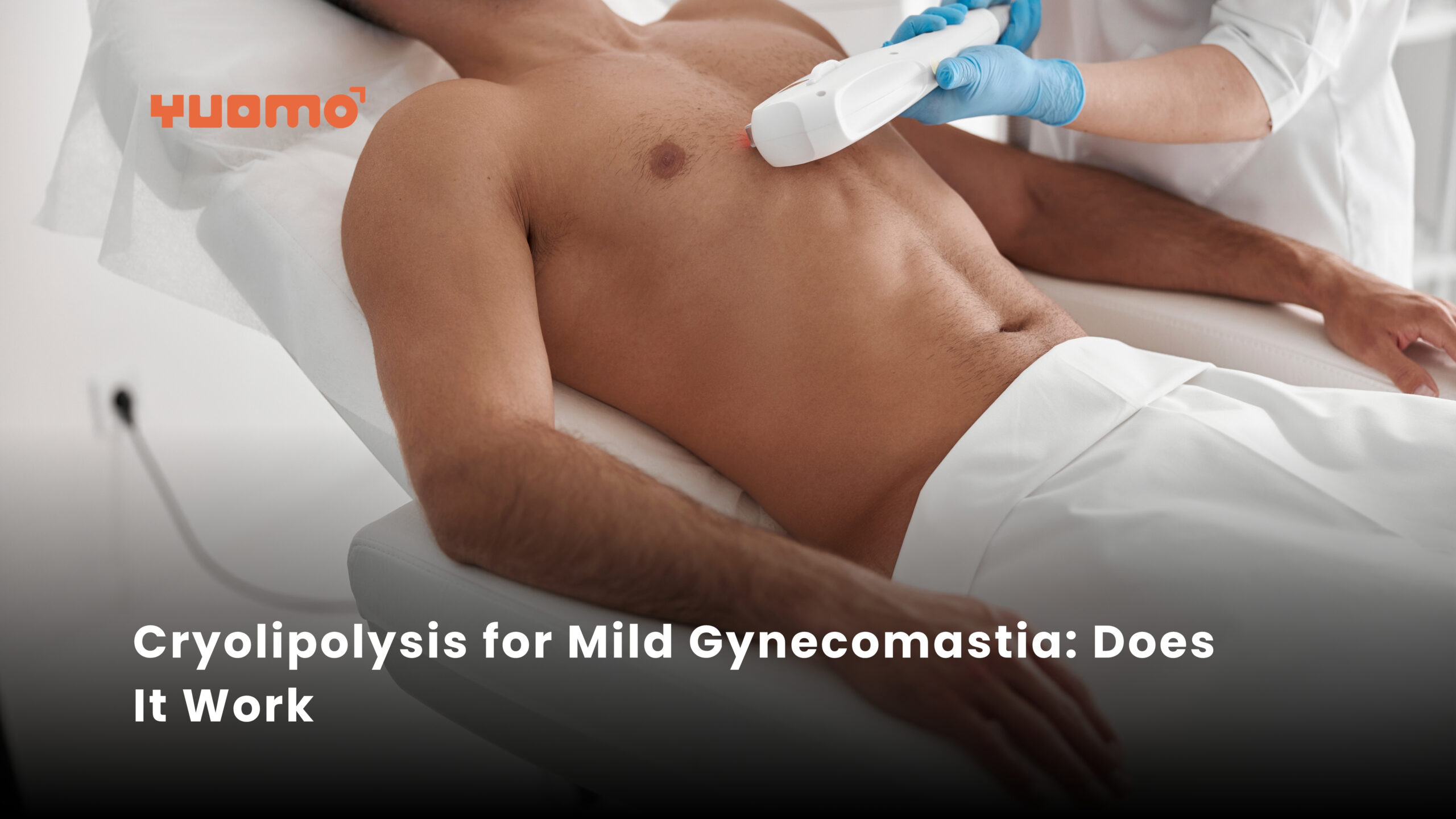
Once those fat cells are crystallised, the body clears them gradually through the lymphatic system over the following 8 to 12 weeks. Clinical studies support an average fat reduction of 20 to 25% per session in the treated area. For the male chest, applicators are positioned over the areas of fullness, the session runs approximately 35 to 60 minutes per side, and there is no anaesthesia, no incisions, and no recovery period required.
The destroyed fat cells don’t return. As long as weight remains stable, the results are long-lasting.
Does It Actually Work for Gynecomastia?
For fat-based chest fullness, yes, cryolipolysis produces real, measurable, and lasting results. Men who are close to their target weight, have reasonable skin elasticity, and whose chest fullness is predominantly fat-based consistently see meaningful improvement in chest contour.
For mild mixed gynecomastia where there’s a modest glandular component alongside fat, cryolipolysis reduces the fatty element and noticeably improves appearance. Many men in this category find the result is sufficient. Some may still benefit from a minor procedure to address residual glandular tissue, but the improvement from fat reduction alone is often significant.
For moderate to severe true gynecomastia, where glandular tissue is the dominant issue, cryolipolysis alone is unlikely to deliver what most patients are hoping for. Male breast reduction surgery, which directly excises the glandular tissue, remains the more appropriate path in those cases.
Must read: Liposuction vs CoolSculpting for Men: Which Is Better?
Who Is the Right Candidate?
Cryolipolysis for the male chest works best when:
- Chest fullness is predominantly or partially fat-based, confirmed through clinical assessment
- You’re at or close to a stable, healthy weight. Cryolipolysis is a contouring treatment, not a weight loss solution
- Skin elasticity is good as fat volume reduces, the skin needs to contract evenly for the best contour result
- Expectations are realistic. This is a refinement procedure, not a dramatic surgical transformation
- There are no underlying hormonal or medical conditions driving active glandular growth
If you’re unsure whether you’re a candidate, that’s not something to guess at. The assessment itself takes the uncertainty out of the decision.
What to Expect: Results and Timeline
Cryolipolysis results develop gradually. Most men start noticing changes at 4 to 6 weeks, with final results visible at around the 3-month mark as the body completes its clearance of treated fat cells.
For mild to moderate fat-based chest fullness, one to two sessions is typically sufficient. Sessions are spaced 6 to 8 weeks apart to allow the first round of results to fully develop before assessing whether a second session is needed.
In the days following treatment, the treated area may feel firm, tender, or slightly red. This is normal and resolves on its own. There is no downtime; most men return to work and normal activity immediately.
Cryolipolysis vs. Gynecomastia Surgery
Cryolipolysis |
Gynecomastia Surgery |
|
| Best for |
Fat-based or mild mixed gynecomastia |
True or moderate-severe gynecomastia |
| Downtime |
None |
1–2 weeks |
| Anaesthesia |
Not required |
Required |
| Addresses glandular tissue |
No |
Yes |
| Results timeline |
8–12 weeks |
Immediate, refined over weeks |
| Scarring |
None |
Minimal, well-concealed |
| Sessions needed |
1–2 typically |
Single procedure |
Neither option is inherently better; the right choice depends entirely on what type of tissue is involved and what outcome you’re looking for. Some men benefit from a combination approach: cryolipolysis to address the fat component, and a minor surgical step for residual glandular tissue. A thorough consultation makes this clear from the start.
Must read: Is Liposuction a Weight Loss Treatment or Body Contouring Solution?
What Men Who’ve Been Through This Say
The concern men bring to us most consistently isn’t just about how the chest looks; it’s about how long they’ve been putting up with it. Many have tried training through it, adjusting how they dress around it, and avoiding situations where it would be noticed. The relief after seeing results isn’t just physical. It’s the removal of something that’s been quietly limiting confidence for a long time.
Cryolipolysis for the right candidate, particularly men with fat-based or mild mixed chest fullness, consistently delivers a visible, natural-looking improvement without surgery, without downtime, and without the chest ever looking like it’s been “done.”
At Yuomo, We Start With the Right Diagnosis
The most important thing we at YUOMO do before recommending cryolipolysis for any chest concern is confirm what we’re actually treating. If fat is the primary issue, cryolipolysis is a clinically sound, well-evidenced option, and we’ll tell you exactly what results are realistic for your case. If there’s a significant glandular component, we’ll tell you that too and point you toward what will actually work.
No treatment should be recommended without that assessment first. That’s where every conversation at Yuomo begins.
FAQs
Q. Can cryolipolysis treat true gynecomastia?
No. Cryolipolysis targets fat cells only. True gynecomastia involves glandular breast tissue, which does not respond to fat-freezing technology. A clinical assessment is the only reliable way to determine which type you have before starting treatment.
Q. How many sessions are needed for the male chest?
Most men with mild to moderate fat-based chest fullness see great improvement after one to two sessions, spaced 6 to 8 weeks apart. The number of sessions depends on the volume of fat and the level of improvement being targeted.
Q. Is cryolipolysis for the chest painful?
Most patients experience a strong cold sensation and mild pressure during the first few minutes of each session, which subsides quickly as the area becomes numb. Post-treatment tenderness and firmness can last a few days but resolves without intervention.
Q. How long do results last?
The fat cells treated by cryolipolysis are permanently destroyed and do not return. Results are long-lasting provided weight remains stable after treatment.
Q. What’s the difference between gynecomastia and pseudo-gynecomastia?
Gynecomastia involves actual glandular breast tissue, typically caused by hormonal changes. Pseudo-gynecomastia is chest fullness caused entirely by fat accumulation. Both can look similar but have different causes and require different treatments, which is why a proper assessment matters before choosing any approach.
Q. Can cryolipolysis be combined with other treatments for gynecomastia?
Yes. For men with mild mixed gynecomastia where both fat and a small amount of glandular tissue are present, cryolipolysis can be combined with a minor surgical procedure to address both components. This combination approach is sometimes the most effective route to a clean, flat chest contour.